- Shop All
- Replacement Parts
- Performance Parts
- Accessories
- Oil & Fluids
- Special Offers
- Advance Rewards
- Advice & How-Tos
- Project Guides
Powersports Battery
Motorcycle batteries supply the electrical power needed to start the bike's engine and operate electrical systems, including lights, ignition and accessories. There are different types of batteries for a motorcycle and you should always refer to your owner's manual to select a compatible battery for your bike. Regular battery maintenance is necessary. Keeping the terminals clean, checking the electrolyte levels (for non-sealed batteries), and charging when necessary, can help prolong its lifespan and ensure reliable operation. Buy online or visit your local Advance Auto Parts and have one of our knowledgeable team members help you.

Same Day Home Delivery
Not Available For This Item
Home Delivery
Not available for this item

Same Day Home Delivery
Not Available For This Item
Home Delivery
Not available for this item

Same Day Home Delivery
Not Available For This Item
Home Delivery
Not available for this item

Same Day Home Delivery
Not Available For This Item
Home Delivery
Not available for this item

Same Day Home Delivery
Not Available For This Item
Home Delivery
Not available for this item

Same Day Home Delivery
Not Available For This Item
Home Delivery
Not available for this item

Same Day Home Delivery
Not Available For This Item
Home Delivery
Not available for this item

Same Day Home Delivery
Not Available For This Item
Home Delivery
Not available for this item

Same Day Home Delivery
Not Available For This Item
Home Delivery
Not available for this item

Same Day Home Delivery
Not Available For This Item
Home Delivery
Not available for this item

Same Day Home Delivery
Not Available For This Item
Home Delivery
Not available for this item

Same Day Home Delivery
Not Available For This Item
Home Delivery
Not available for this item

Same Day Home Delivery
Not Available For This Item
Home Delivery
Not available for this item

Same Day Home Delivery
Not Available For This Item
Home Delivery
Not available for this item

Same Day Home Delivery
Not Available For This Item
Home Delivery
Not available for this item
Same Day Home Delivery
Not Available For This Item
Home Delivery
Not available for this item

Same Day Home Delivery
Not Available For This Item
Home Delivery
Not available for this item

Same Day Home Delivery
Not Available For This Item
Home Delivery
Not available for this item
To get the motorcycle battery you need for your next open road adventure, select a battery that meets or exceeds original equipment specifications for:
Cold Cranking Amps (CCA) - Rates a battery's ability to start an engine in cold temperatures. The higher the CCA rating, the greater the battery's starting power.
Reserve Capacity (RC) - How long a new fully charged battery can hold its charge.
Amp Hour (Ah) – Measures how long a battery can provide amperage for one hour.
There are different types of bike batteries. Make sure you choose the right type for your make/model and specific needs.
Flooded – Flooded lead acid batteries are usually the most affordable motorcycle battery. However, they tend to have a shorter lifespan than AGM or Lithium batteries. They also will require additional maintenance.
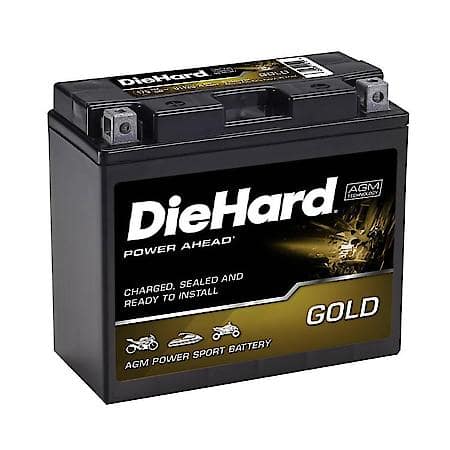
AGM - (short for Absorbed Glass Mat) batteries are completely sealed. This makes them non-spillable and maintenance free. AGM batteries have several benefits over flooded batteries. They have longer lifespans, quicker recharge times, and slower discharge rates. Additionally, they can withstand vibrations as well as extreme cold and heat.
AGM batteries have a greater upfront cost than flooded batteries but can end up costing less in the long run, due to their longer lifespans.Lithium – Lithium batteries have a very low self-discharge rate, which means they hold a charge for much longer in storage. They're also about 55% lighter than a lead acid battery. Lithium batteries cost more than flooded or AGM. However, they are long-lasting and ultimately save money.
Compatibility: Check for battery compatibility with your motorcycle's make, model and year. Check the owner's manual or consult with one of our knowledgeable team members to find the battery that fits your bike correctly.
Battery Type: Decide whether you prefer a conventional (lead-acid) battery or a maintenance-free (sealed) battery. Compare maintenance requirements, cost and convenience.
Size and Dimensions: The battery's physical dimensions need to match the available space in your motorcycle's battery compartment. Look for the correct battery size code or refer to the owner's manual to determine the appropriate dimensions.
Voltage and Ampere-Hour (Ah) Rating: Choose a battery with the correct voltage (typically 12 volts for motorcycles) and an appropriate Ah rating. The Ah rating determines the battery's capacity, indicating how long it can provide a certain amount of current. Consider your motorcycle's power requirements and the electrical accessories you use to determine the suitable Ah rating.
Cold Cranking Amps (CCA): CCA represents the battery's ability to start the engine in cold temperatures. Consider the climate where you'll be riding, as colder temperatures require higher CCA ratings for reliable starting performance.
Brand and Quality: Opt for reputable battery brands known for their reliability. Look for batteries that meet industry standards and have positive reviews from motorcycle enthusiasts.
Warranty: Check the warranty offered by the battery manufacturer. A longer warranty period indicates the manufacturer's confidence in their product's quality.
Price: Consider your budget, but don't compromise quality and performance for a lower price. Investing in a reliable battery is essential for the overall performance and longevity of your motorcycle's electrical system.
Maintenance: Assess your willingness and ability to follow regular battery maintenance. Conventional batteries require periodic checking of electrolyte levels and water addition, while maintenance-free batteries eliminate this need.
Longevity: Consider the expected lifespan of the battery based on its construction, quality, and user reviews. Longer-lasting batteries may provide better value for money over time.
Read this article on how to choose the Best Motorcycle Battery.
It is important to use the correct amperage for safe and effective charging. The appropriate amperage depends on the capacity of your motorcycle battery. As a general guideline, you can use a charging amperage of 10% of the battery's amp-hour (Ah) rating.
For example, if your bike battery has a capacity of 10 Ah, you can use a charging amperage of 1 amp (10% of 10 Ah). Similarly, if your battery is rated at 6 Ah, a charging amperage of around 0.6 amps would be suitable.
Charging at a lower amp rate helps maintain a slow and steady charge, which is better for the overall health of the battery. Here's why:
- Battery Longevity: Charging at a lower amp rate reduces the risk of overheating the battery, which can be damaging and shorten its lifespan. Slow charging allows for a more controlled and efficient absorption of the electrical energy.
- Safety: Charging at a lower amp rate minimizes the risk of overcharging, which can lead to electrolyte loss, acid spills and potential damage to the battery. It's safer to opt for a slower charge to avoid potential hazards.
- Battery Health: A slow charge allows the battery's cells to receive a more thorough and complete charge. It helps prevent sulfation, a common issue in batteries, where lead sulfate crystals accumulate and reduce the battery's capacity to hold a charge effectively.
Always refer to the manufacturer's instructions for your battery charger to determine the recommended charging amperage range. Using a higher amperage than recommended can potentially damage the battery, while using a lower amperage may result in a slower charging process.
Shop Advance for Chargers and Maintainers.
Removing and installing a motorcycle battery may vary slightly depending on the make and model of your motorcycle. However, here are general steps to guide you through the process:
Preparation: Make sure the motorcycle is turned off and the key is removed from the ignition. Additionally, gather the necessary tools, such as a wrench or socket set, that fit the battery terminals and hold-down bracket. Don't forget your safety equipment – eye protection, gloves, etc.
Locate the Battery: Find the battery on your motorcycle. Typically, it is located under the seat, beneath a side panel, or in a designated battery compartment. Refer to your motorcycle's owner's manual if you're unsure about the exact location.
Disconnect Negative Terminal: Start by disconnecting the negative terminal (marked with a "-") first. Loosen the terminal nut or bolt using the appropriate wrench or socket and then carefully remove the negative cable from the battery terminal. Make sure the cable is positioned away from the battery and any metal surfaces or components to prevent accidental contact.
Disconnect Positive Terminal: Loosen the nut or bolt securing the positive terminal (marked with a "+") and remove the positive cable from the battery terminal. Exercise caution to avoid any contact between the positive cable and the motorcycle's frame or any metal parts.
Remove the Battery: Remove any screws or fasteners securing the battery in place If it has a hold-down bracket or strap. Lift the battery out of its compartment, taking care not to damage any nearby components.
Prepare the New Battery: Check to see if the new battery is fully charged and ready for installation. Double-check that it matches the specifications and size requirements for your motorcycle.
Position the Battery: Carefully place the new battery into the battery compartment, ensuring it sits securely and doesn't move around.
Install Hold-Down Bracket (if applicable): If your motorcycle's battery compartment has a hold-down bracket or strap, reattach it to secure the battery in place. Use the appropriate screws or fasteners to secure the bracket snugly without over-tightening.
Connect Positive Terminal: Start by connecting the positive cable to the positive terminal of the new battery. Slide the terminal over the battery post and tighten the nut or bolt securely using the appropriate wrench or socket.
Connect Negative Terminal: Connect the negative cable to the negative terminal of the battery. Slide the terminal over the battery post and tighten the nut or bolt securely.
Double-Check Connections: Make sure both terminals are tightly connected and there is no looseness or movement. Verify that the cables are clear of any surrounding components and not at risk of contacting metal parts.
Test and Verify: Turn on the motorcycle and check if all electrical systems, lights and indicators are functioning properly. If everything works as expected, the battery installation is complete.
Remember to follow any additional instructions specific to your motorcycle's make and model as outlined in the owner's manual. If you're uncertain about any step or have concerns, it's always advisable to ask a professional motorcycle mechanic for assistance.
A battery's voltage depends on its state of charge and type. In general, motorcycle batteries are typically 12-volt batteries. Here are some voltage ranges you may encounter:
Fully charged battery: A fully charged 12-volt motorcycle battery typically reads around 12.6v for flooded and 13.0v for AGM when measured with a voltmeter.
Partially charged battery: If a battery is partially discharged, the voltage will be lower. For example, a 50% charged battery may read around 12.2 volts.
Discharged battery: When a battery is significantly discharged, its voltage will drop even further. A completely discharged battery may read around 11.8 volts or lower.
It's important to note that these voltage ranges are approximate and can vary depending on the battery chemistry and manufacturer. It's always a good idea to rely on the battery manufacturer's specifications or your motorcycle's owner's manual for precise voltage recommendations.
Sport Bikes/Sporty Motorcycles: Sport bikes typically have higher power demands due to their performance-oriented nature. Consider a battery with higher CCA and Ah ratings for sufficient starting power and to accommodate any additional electrical accessories you may have installed.
Cruisers/Touring Bikes: Cruisers and touring motorcycles often have more electrical accessories like heated grips, stereo systems and navigation devices. The battery will need a higher Ah rating to handle the increased power demands. Additionally, a battery with good vibration resistance can be beneficial for long rides.
Off-Road/Dual-Sport Motorcycles: Off-road and dual-sport motorcycles are subjected to more challenging conditions like vibrations, impacts and temperature variations. Look for a battery with enhanced durability, vibration resistance and the ability to handle rough off-road terrain.
Adventure Bikes: Adventure motorcycles are designed for long-distance touring and off-road adventures. They typically have additional electrical accessories and higher power demands. Choose a battery with a higher Ah rating and good vibration resistance to withstand demanding conditions.
Scooters and Mopeds: Scooters and mopeds generally have smaller engines and lower power requirements. Choose a battery that matches the recommended specifications for proper fit and performance.
Vintage or Classic Motorcycles: Older or vintage motorcycles may have certain electrical system requirements. Choose a battery that matches the original specifications or consult with experts who specialize in vintage motorcycles for guidance.
Electric Motorcycles: Electric motorcycles have unique battery needs. It's crucial to follow the manufacturer's recommendations for battery type, capacity and charging specifications. The battery needs to have sufficient range and charging capabilities for your riding needs.
High-Performance Motorcycles: Super sports or superbikes, may have higher power demands due to their powerful engines and advanced electronics. Consider a battery with high CCA and Ah ratings to handle the power requirements and any additional electrical accessories.
Always refer to your owner's manual and experts or professionals specific to your motorcycle type for precise recommendations on the right battery for your exact model. They can provide insights based on the unique characteristics and requirements of your motorcycle type.
Cold Weather Performance: If you live in a region with cold winters or plan to ride in cold conditions, prioritize a battery with a higher Cold Cranking Amps (CCA) rating. CCA indicates the battery's ability to start the engine in cold temperatures. A higher CCA rating provides reliable starting performance even in frigid conditions.
Hot Weather Performance: In hot climates, where high temperatures can put strain on the battery, consider a battery with good heat resistance and durability. Look for batteries designed to withstand heat and offer improved thermal stability.
Vibration Resistance: If you ride on rough roads, off-road trails, or have a motorcycle with strong vibrations, prioritize a battery with enhanced vibration resistance. Vibration-resistant batteries are better equipped to withstand the constant movement and jolts, reducing the risk of internal damage and extending the battery's lifespan.
Maintenance-Free Batteries: If you prefer a battery with minimal maintenance requirements, opt for a maintenance-free or sealed battery. These batteries are designed to be maintenance-free, eliminating the need to regularly check electrolyte levels or add water.
AGM (Absorbent Glass Mat) Batteries: AGM technology provides better vibration resistance, enhanced electrical performance and increased durability. These batteries are also spill-proof and can be mounted in various orientations. They are another option for motorcycles ridden in challenging conditions.
Reserve Capacity: Reserve capacity is a measure of how long a battery can provide power to essential electrical systems in case the charging system fails. If you plan on long rides or riding in remote areas, you may want a battery with a higher reserve capacity to provide a longer backup power supply.
Research and Brand Reputation: Do thorough research and choose reputable battery brands known for producing reliable batteries suitable for varying riding conditions and climates. Look for batteries with positive reviews and a proven track record of performance and durability.
Ask the Experts: If you're unsure about the battery requirements for your riding conditions and climate, ask professionals familiar with the region.